
Back, lower back or joints
If pain, stiffness or reduced mobility makes it harder to move, work, train or simply function normally in everyday life.
View treatment for the back, lower back and jointsTreatments
You do not need to know the name of a technique or exactly which treatment to choose.
Perhaps you are dealing with back pain. A neck that almost always feels tense. A shoulder that no longer moves as it used to. Or a problem that keeps returning even though you have already tried to do something about it.
We can start with what you are experiencing – and work out the rest from there.
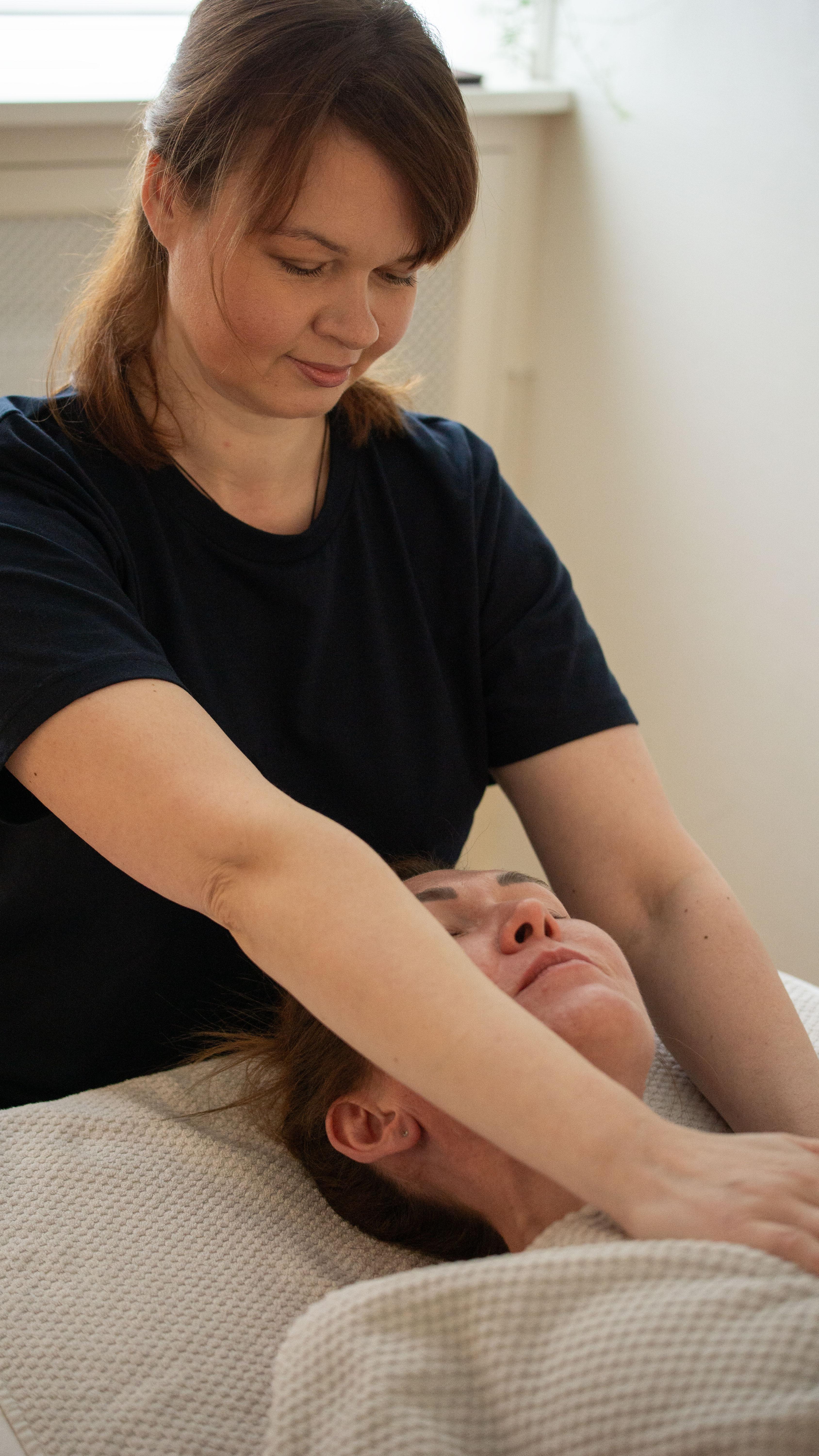
You do not need to know in advance.
The treatments have different areas of focus, but the body does not always fit neatly into one category.
If your concern is new, complex, longstanding – or you simply do not know where to begin – you can start with an initial consultation and assessment.
We begin with your history, symptoms and the way your body moves before deciding what may make sense as the next step.
You do not need to choose the right technique beforehand. That is part of my job.
If pain, stiffness or reduced mobility makes it harder to move, work, train or simply function normally in everyday life.
View treatment for the back, lower back and jointsIf your body feels tight, overloaded or restricted – locally or across larger areas – and the tension keeps returning.
View muscle & fascial treatmentFor tired, heavy legs or mild swelling with an established cause. Gentle manual lymphatic drainage, including during pregnancy following individual assessment.
View manual lymphatic drainageIf you experience tension, differences in muscle activity or asymmetry around the face and jaw and want an individual manual assessment and treatment.
View facial treatmentIf the concern is longstanding, involves several areas or does not fit clearly into one category.
Start with an initial consultationChoose the treatment that fits your situation – or start with an assessment if you are unsure. Current prices are available in the online booking system.
When this is your first visit, you are unsure what to choose, or the concern is unclear. Conversation, assessment and initial manual treatment in the same session.
For pain, stiffness or reduced mobility in the back, lower back and joints that affect function and everyday movement.
A longer session when the concern is more complex, has been present for a long time, or involves several relevant areas.
For recurring tension, overload or areas that feel tight and restricted.
Manual treatment for tension, asymmetry or restriction around the face and jaw.
Current prices are available in the online booking system.
How I work
We start by talking about what you are experiencing.
I will typically ask when the problem began, what provokes it, how it affects everyday life and what you may already have tried.
I then look at relevant movements and areas of the body.
During treatment, I combine the manual techniques that make sense based on what I find.
I do not follow a fixed sequence of techniques. Treatment is continuously adapted to your concern and the way your body responds.
And yes – you are welcome to ask questions along the way.
I am happy to explain why I may suddenly be working somewhere other than the place you pointed to when you arrived. 🙂
It depends on the concern.
Some people come with something relatively recent and localised, where only a small number of sessions may be relevant.
Other concerns have developed over a longer period, involve several areas or require us to work gradually with movement, tension patterns and the body's response.
I therefore also offer treatment courses of:
A course does not mean that your body has to follow a fixed plan.
It gives us time to follow progress, adapt the treatment and respond to what changes along the way.
Treatment courses can also be used for maintenance when you already know your body's needs and prefer treatment at longer intervals.
Pain relief can of course be important.
But if you are still moving cautiously, avoiding particular activities or constantly thinking about the area that has been a problem, we may not necessarily be finished.
That is why function matters too.
Can you move more freely?
Can you use your body with less hesitation?
Can you return to the things you have missed being able to do?
For me, that is where treatment becomes meaningful beyond the treatment room.
Manual treatment can be relevant for many muscular, tension and movement-related concerns.
But not every symptom should be treated manually.
If something in your history or symptoms suggests that medical assessment or another authorised healthcare evaluation should come first, I will tell you.
Knowing when not to treat is also part of professional judgement.
Start with what you are experiencing – back, tension, swelling, or something hard to place. If you are unsure, an initial consultation and assessment is the natural place to begin. You do not need to know technique names beforehand.
It depends on the concern. Sometimes a small number of sessions is relevant; other times a course of 3, 5 or 10 treatments gives more room to follow progress and adapt along the way.
Wear clothes you can move in. Depending on the concern, it may be relevant to examine and treat particular areas – we arrange that in the room.
Yes. You do not need a finished explanation or a diagnosis. Book an initial consultation and assessment, and we start with what you feel.
Tell me what you are experiencing, what is limiting you and what you would like to be able to do again.
We can start there.